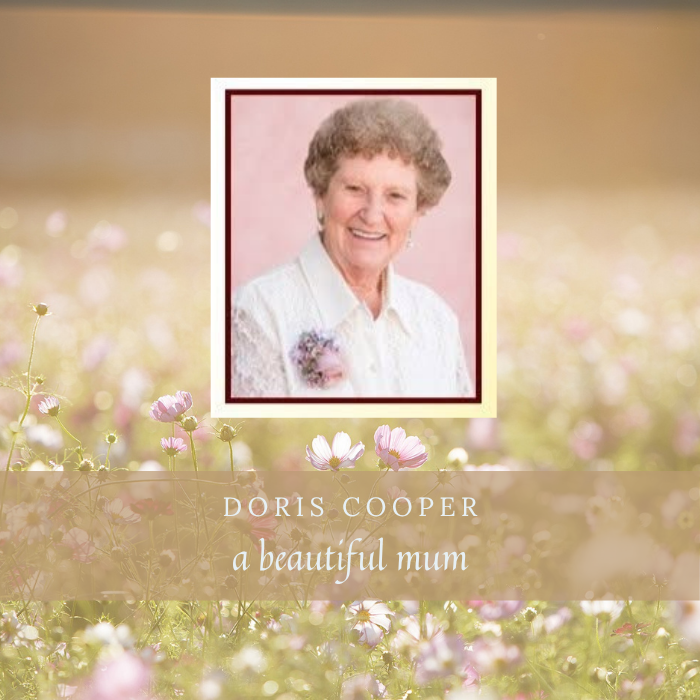
For the Love of Doris Cooper
One of the things I have come to value most in creating funeral ceremonies is the importance of keeping them simple.
As celebrants, we can sometimes feel that we need to fill the ceremony with our own words — to tell the person’s whole life story, explain who they were, and somehow find the perfect words to capture the enormity of a life. But my experience has shown that the people who knew and loved them are the ones best placed to do that through telling the eulogy and tributes.
A simple opening reflection can set the tone, acknowledge the significance of the life that has been lived, and give everyone a sense of why they have gathered. In Doris’s ceremony, for example, I began by sharing what her family had told me when we met:
“When I met with Doris’s family last week, they spoke of her with deep affection. Again and again, they described a woman who was selfless, strong, easy going; whose presence brought steadiness to their lives. She was someone they could rely on. She cared deeply for her family, offered her support generously, and lived with kindness, humility and a strong sense of responsibility.
Doris was a familiar and reassuring part of the rhythm of family life whether you were nearby or afar. Her love was expressed in everyday ways, through consistency, dependability, kindness and simply being there.
Today we remember a much-loved Mum, Nanna, Great Nan, sister, aunt and friend. We celebrate a life that was lived with grace and deep love, and there is gratitude for the legacy she leaves in the hearts of all who knew her.”
Those few paragraphs offered a sense of who Doris was and the place she held in the lives of those around her. They gave the ceremony a foundation. The eulogy and tributes carried the stories, the memories, the family humour, the particular details and the voices that could only belong to Doris and her family. And this, I believe, is one of the most important ways we can keep a ceremony both relevant and unique. Our role as celebrants is not always to say more. Simple does not mean less meaningful. Often, simplicity allows the meaning to come through.